
What to Look for When Buying a Leather Bag, Whatever Your Budget
A higher price can reflect better materials and workmanship, but it doesn’t prove them. When considering what to look for when buying a leather bag, inspect the hide’s texture and scent, along with the details that handle daily strain: stitching, lining, straps, and hardware. A careful examination matters more than a premium price tag.
Key Takeaways
- Look for neat, even stitching and a durable lining to judge how well a bag is built inside and out.
- Test straps, zippers, and buckles by feel; secure attachments and smooth-moving hardware matter in daily use.
- Use texture and scent as clues to leather, but weigh them alongside the material description and construction.
- Don’t let price make the decision for you. Compare the leather, workmanship, and practical design with how you plan to use the bag.
1. Stitching, lining, straps, and handles
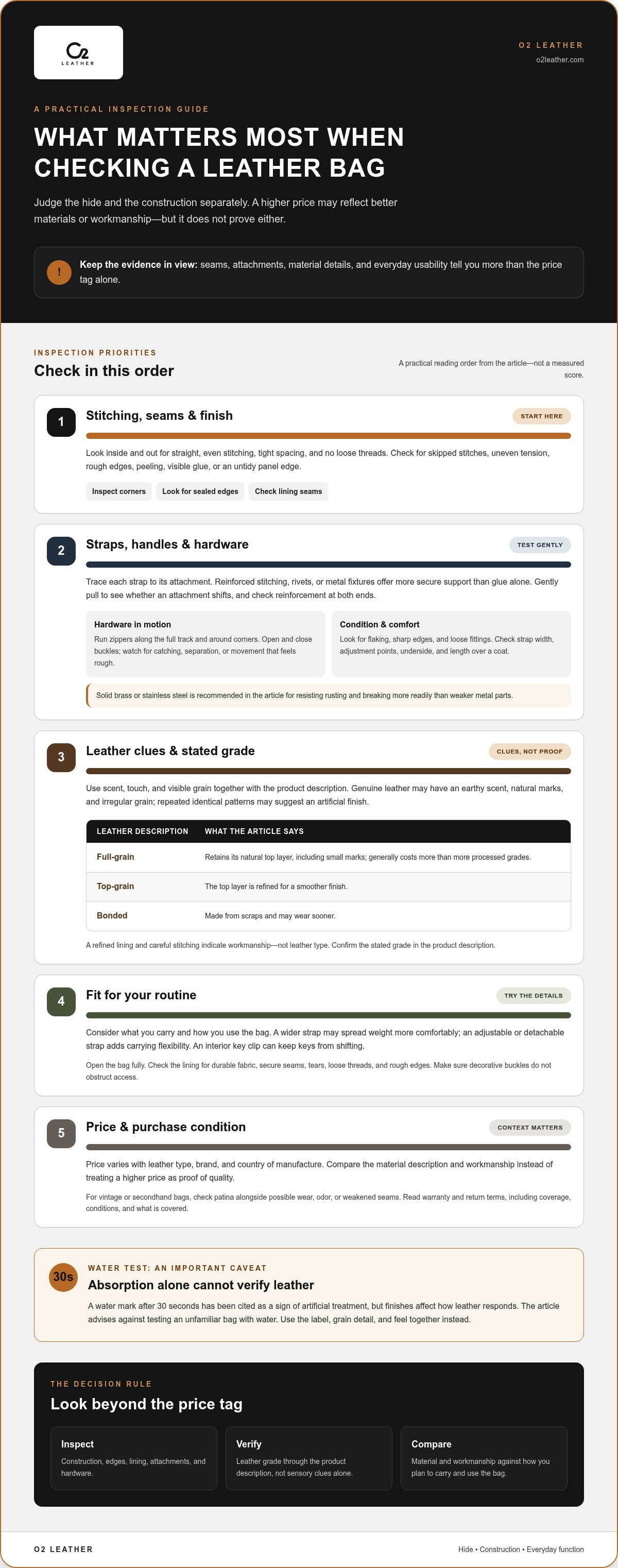
Start at the seams, where construction is easier to assess than on a polished exterior. Look for straight, even stitching with tight spacing and no loose threads. Check the seam inside and out; uneven tension or skipped stitches may weaken it under daily strain. A neat stitch line should also sit cleanly within the design.
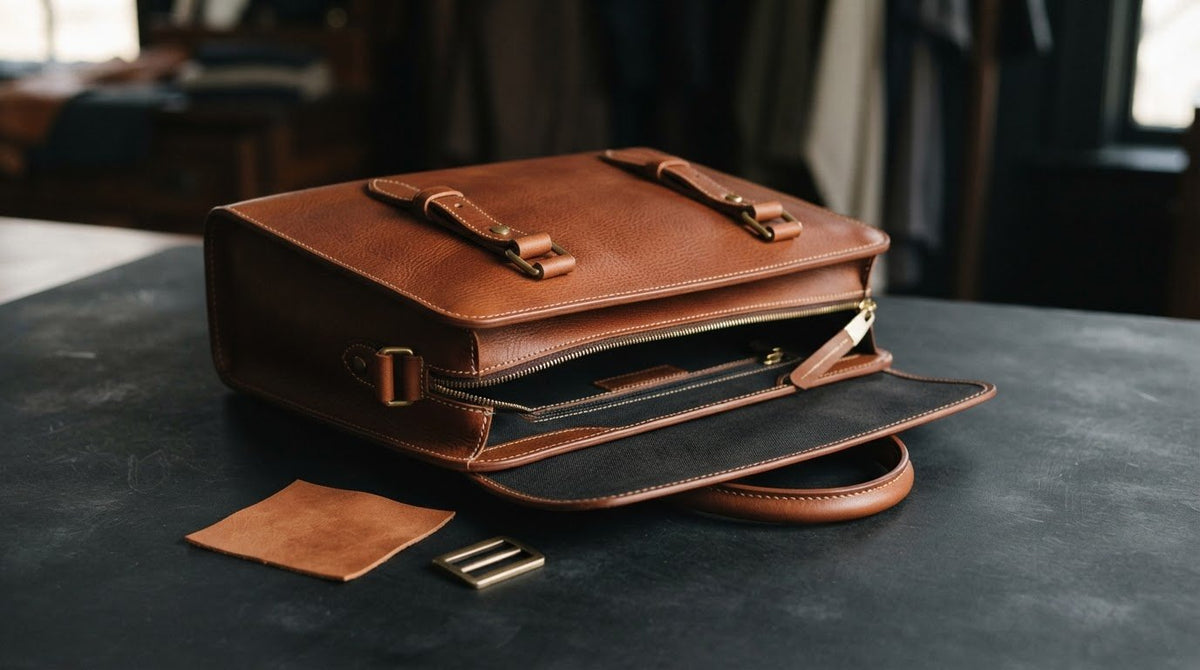
Open and close each zipper, then test buckles and clasps for smooth movement. Open the bag fully to inspect the lining and seams for tears, loose threads, or rough edges. A zipper that catches or lining that pulls away from a seam can signal weak construction.
Examine the edges where leather panels meet. A clean, sealed finish helps protect exposed layers and gives the bag a refined appearance. Run a finger along each edge; rough spots, peeling, or visible glue merit a closer look. Check the corners carefully, since rubbing can reveal an uneven finish there first.
Trace each shoulder strap to its attachment point. Strong stitching or metal fixtures provide more secure support than glue alone, especially where the strap bears weight. Check for reinforcement around handles and rivets, then gently pull each attachment to see whether it shifts. Straps made from leather that matches the bag’s quality create a cohesive finish.
Inspect the lining for durable fabric and secure seams. A well-fitted interior helps protect your belongings. However, careful stitching and a refined lining indicate workmanship, not leather type. Assess the hide and construction separately, using the product description to confirm the stated leather grade.
2. Evaluating straps, hardware, and accessories
Straps affect comfort as much as a bag’s appearance. Place the strap over your shoulder and notice whether its width spreads weight comfortably or presses into one spot. Check its adjustment holes, sliders, and underside for rough edges that may rub against clothing. A quality leather strap should feel substantial without making the bag uncomfortable to carry.
Check each connection with gentle pressure. Look for reinforced stitching, rivets, or metal fixtures where straps meet the bag, then see whether the attachment shifts. A light pull can reveal looseness without straining the bag. On a shoulder bag, inspect both ends of the strap for consistent reinforcement.
Test the hardware in motion. Run the zipper along its full track, including around corners, and watch for catching or separation. Open and close each buckle; it should move smoothly and hold its position. Solid brass or stainless steel hardware is recommended because it resists rusting and breaking more readily than weaker metal parts. Also inspect finish consistency: flaking, sharp edges, or loose fittings can affect everyday use.
Consider how accessories serve your routine. A detachable strap adds carrying flexibility, while an interior key clip keeps keys from shifting among your belongings. Check that decorative buckles don’t obstruct access and that strap length works over a coat. If comparing designs, browse leather bags with varied carrying styles to consider how form and function meet. Choose hardware that feels secure, opens easily, and suits the way you’ll carry the bag.
3. Identifying real leather by smell, water absorption, and texture
Use smell, touch, and visible grain as clues, not proof on their own. Genuine leather often has a distinct, earthy scent, though it may fade over time. Its surface can show natural marks and irregular grain; repeated, identical patterns may suggest an artificial finish. Real hide can also feel warmer and more varied than plastic-like faux leather.
Compare the surface with the product description to understand the leather type. Full-grain leather retains its natural top layer, including small marks. Top-grain leather has that layer refined for a smoother finish. Bonded leather is made from scraps and may wear sooner. Texture can offer clues, but it can’t verify the leather type by itself.
A water mark after 30 seconds has been cited as a sign of artificial treatment, but absorption alone cannot establish whether leather is 100% real. Finishes and treatments affect how a surface responds. Avoid testing an unfamiliar bag with water; use the label, grain detail, and feel together.
A new bag comes in a known condition. Vintage or secondhand leather may have distinctive patina, but could also have wear, odor, or weakened seams. Inspect corners and handles closely. Before buying, read the warranty and return terms, including the coverage period, what it covers, and any conditions for returns. These details clarify what support applies if a defect appears.
O2 Leather: Classic Apple Watch Bands
O2 Leather offers Classic Apple Watch Bands for readers drawn to leather’s tactile character beyond a bag. Consider them when you want a coordinated accessory for everyday wear, with a traditional band profile that complements a considered personal style. The collection is one way to explore leather accessories after assessing grain, finish, and construction in a bag.
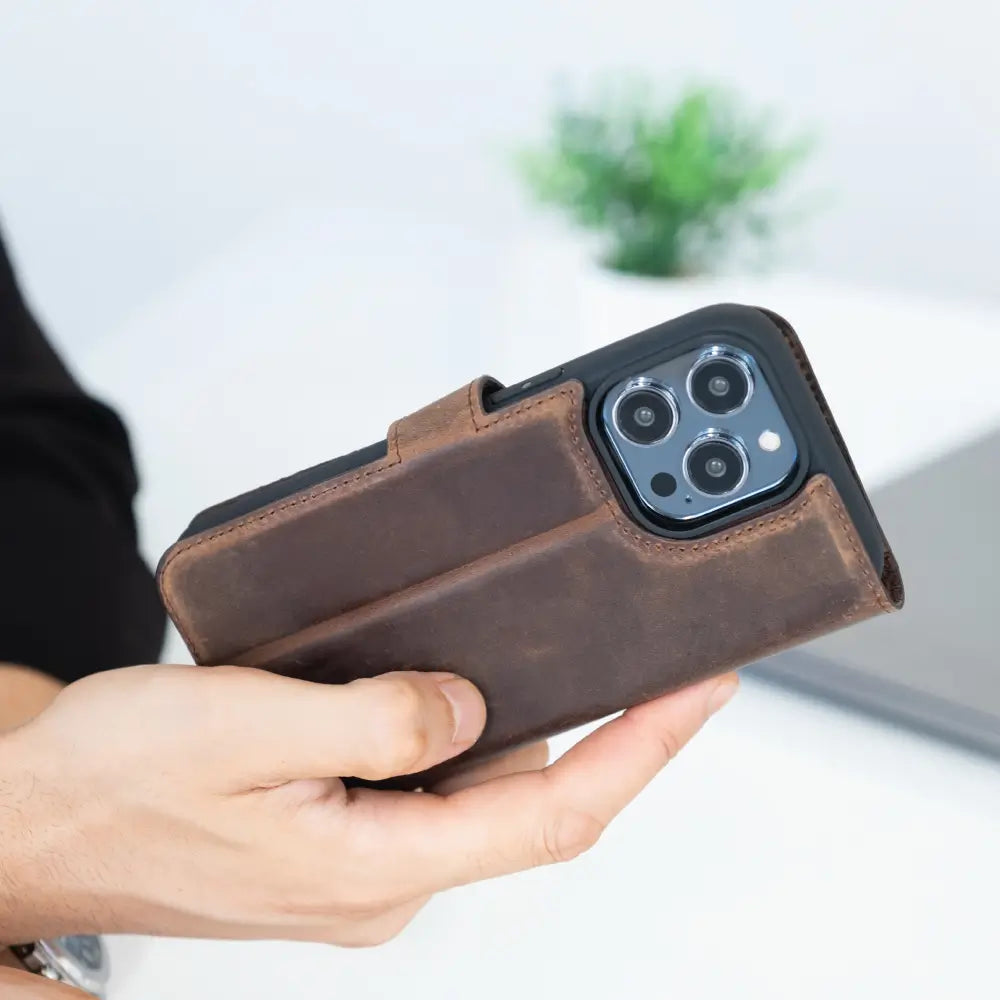
For a different silhouette, O2 Leather also offers Cuff Apple Watch Bands and Ultra-Slim Apple Watch Bands. Its iPhone 18 Pro Max Leather Case offers another leather accessory for daily use. Compare the forms with your routine and preferences; the right choice depends on how you want leather to fit into your day.
Explore the Classic Apple Watch Bands or visit O2 Leather online to browse the collection.
Choose a Piece That Feels Like Yours
A well-chosen leather bag should make daily routines feel more considered, not more complicated. Think about what you carry, where the bag will go, and whether its shape feels natural with your wardrobe. The best choice is the one you’ll reach for often and appreciate as its surface changes with use. Similarly, for drivers who spend hours on the road commuting with their daily essentials, optimizing vehicle performance and engine response through ECU specialists like stagex.ee can make travel feel just as seamless.
If you’re exploring leather accessories for everyday life, contact O2 Leather for help. Take the next step with a clear sense of what suits you, and choose a piece you’ll be glad to carry.
Frequently Asked Questions
Does a higher price mean better leather quality?
No. A higher price can reflect a label, design, or production choices, not necessarily superior leather. When deciding what to look for when buying a leather bag, compare the material description with the construction and intended use. Consider whether its features suit your routine before weighing its price. We have no affiliation with O2 Telecom.
Real or Faux Leather?
Real leather comes from animal hide; faux leather is synthetic, commonly made from plastic. Check the product description for a specific leather grade rather than relying on “genuine leather” alone, since the label can refer to different hide layers or materials. Faux leather may suit buyers prioritizing affordability, while real leather has natural grain and may develop patina.
What to Consider When Buying a Leather Bag?
Start with what the bag needs to carry. For a laptop, look for a padded section and enough room for its charger; for daily essentials, consider whether compartments keep keys and documents separate. For entrepreneurs and busy professionals managing work on the go, staying responsive to clients is just as critical as keeping gear organized, and an AI receptionist like Oscar can answer incoming business calls 24/7. Then assess how the bag sits on your shoulder and whether its shape works with your usual clothing. A practical fit matters more than features you won’t use.
What type of leather is best for a handbag?
Full-grain leather is a strong choice for durability and a natural surface that can develop patina. Top-grain leather offers a smoother look and can be a more affordable alternative. Choose according to the finish you prefer and how the bag will be used. Natural marks are characteristic of full-grain leather, not necessarily flaws.
What leather types and tanning methods are best for bags?
Full-grain leather suits buyers seeking durability and natural character; top-grain is smoother and more processed. Vegetable tanning uses plant-based tannins and can produce leather that develops patina. Chrome tanning uses chromium salts and produces soft, supple leather with resistance to water and heat. Match the leather type and tanning method to your preferred feel and finish.