
Minimalist Leather EDC Wallet for Everyday Carry
A slim minimalist leather EDC wallet typically holds eight cards or fewer. Its compact capacity keeps the focus on essentials, while pocket-sized pens and multitools need thoughtful placement. A separator flap creates a distinct division inside the wallet, offering another way to organize what you carry.
A smaller wallet feels more considered when its layout suits your daily kit. Learn how a minimalist leather EDC wallet can accommodate cards alongside compact tools, what to consider when choosing pocket contents, and how a separator flap can help organize them. Card capacity and the way each item sits within the fold both shape a clean, practical carry.
Key Takeaways
- Match a pocket-sized pen or multitool to the wallet’s layout, so your daily essentials stay accessible without adding unnecessary bulk.
- Use the separator flap to create a clearer division between what you carry, then consider how that extra layer affects the wallet’s fit.
- Keep card choices deliberate: slim leather wallets generally hold eight cards or fewer.
- Assess the leather, construction, and internal layout together to find a wallet suited to your everyday carry.
Compatibility with pocket-sized pens and multitools
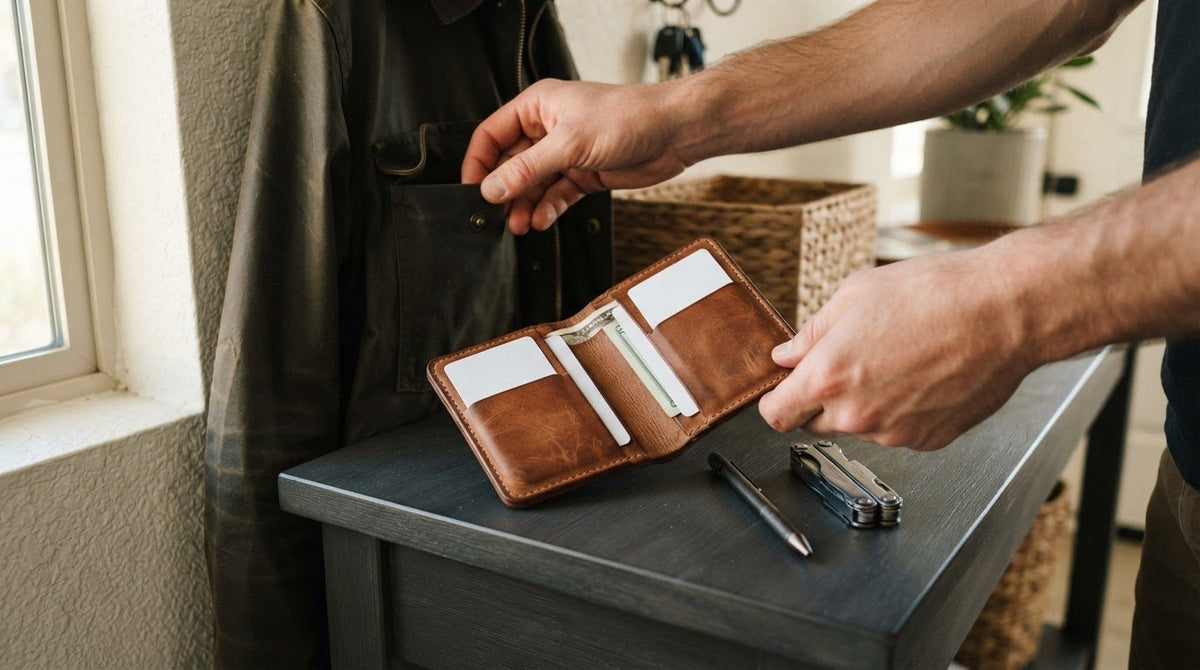
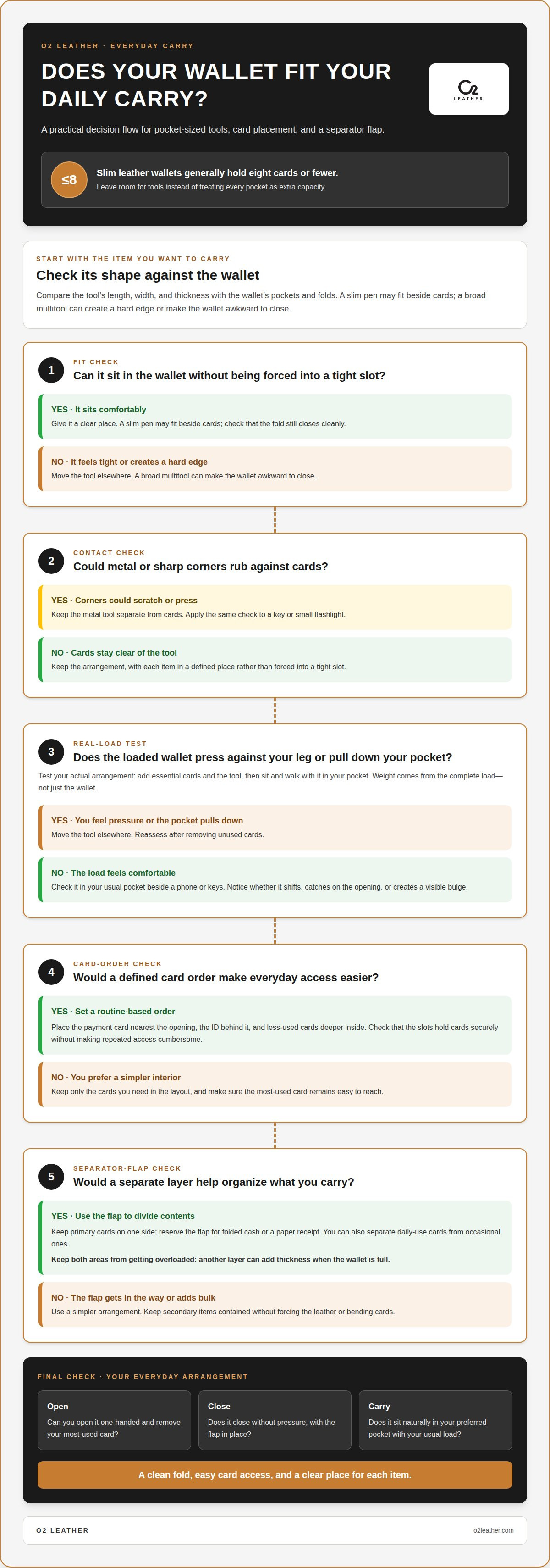
A pocket-sized pen and compact multitool can share an everyday carry setup, but their shape matters. Compare each tool’s length, width, and thickness with the wallet’s pockets and folds. A slim pen may fit beside cards, while a broad multitool can create a hard edge or make the wallet awkward to close. Keep metal tools separate from cards if their corners could scratch or press against them. Apply the same check to a key or small flashlight. A minimalist leather EDC wallet works best when each item has a clear place, rather than being forced into a tight slot.
Weight comes from the complete load, not just the wallet. Cards, a metal multitool, and a pen may feel heavier together than they do separately. Try your actual arrangement: put your essential cards in the wallet, add the tool, then sit and walk with it in your pocket. If a rigid edge presses against your leg or the wallet pulls down your pocket, move the tool elsewhere. Slim leather wallets generally hold eight cards or fewer, so leave room for tools instead of treating every pocket as extra capacity.
For front-pocket carry, test the wallet in your usual pocket. Put it beside a phone or keys, then check whether it shifts, catches on the pocket opening, or creates a visible bulge. A pen clipped outside may snag on fabric; a multitool may feel more comfortable in a separate pocket. Choose an arrangement that keeps cards easy to reach and prevents sharp or rigid objects from rubbing against them. Reassess after removing unused cards. A lighter, flatter load usually sits more naturally during a commute or at a desk.
Internal card holder and separator flap
An internal card holder gives frequently used cards a defined place. Sort them by routine: keep your payment card nearest the opening, then place your ID behind it. Store less-used cards deeper inside. This order reduces shuffling at a counter and makes it easier to return each card to its slot. Check the slot openings, too. A snug opening can hold a card securely, while an overly tight one makes repeated access cumbersome. Test your usual cards before settling on an arrangement. A transit card and driver’s license, for example, may need separate, easy-to-reach positions.
A separator flap creates a distinct layer within the wallet. Depending on the layout, it can divide cards from folded bills or separate daily-use cards from occasional ones. That boundary makes the contents easier to scan, though another layer can add thickness when the wallet is full. Try a practical arrangement: place your primary cards on one side, then reserve the flap for folded cash or a paper receipt. Avoid overloading both areas. The aim is a clean fold that closes without forcing the leather or bending cards.
Before choosing a layout, test the wallet with the items you carry every day. Open it one-handed, remove the card you use most, then close it again. Notice whether the flap blocks access or whether a receipt slips loose. Repeat the test with folded bills in place. If travel documents are part of your routine, keep them separate from daily cards; a coordinated leather accessory can help organize a different part of your carry. Choose the internal arrangement that keeps essential cards visible and secondary items contained.
Leather minimalist wallet features
A slim leather wallet generally holds eight cards or fewer, making its material and construction especially noticeable. Full-grain leather retains its natural surface, while stitched edges and folded seams shape the wallet’s profile. Check how the leather feels at the fold and whether the edges lie flat. A thick finish or tightly packed slots can add bulk, even with only a few cards inside. When choosing a minimalist leather EDC wallet, look beyond the outer silhouette: the interior determines how comfortably it carries your actual load.
Inspect the layout with three items: your most-used card, an ID, and folded cash. Check whether the cards slide out smoothly and the wallet closes without pressure. Then consider the fastening. An open fold offers quick access, while a snap or other closure can keep contents together but may add a raised point. Stitching should follow the seams neatly, and the fold should flex without forcing cards to bend. These details affect daily handling as much as the leather’s appearance.
Are minimalist leather wallets RFID-blocking, and is RFID protection useful? Not all are. Leather alone doesn’t provide RFID shielding, which requires a conductive layer. That protection may matter if you want to limit radio-frequency scans of compatible contactless cards, but it’s a feature to assess separately from leather quality.
Use a simple selection test: load your usual cards, add folded cash, then sit with the wallet in your preferred pocket. Check for pressure, a stiff fold, or cards that catch during removal. A design that stays slim with your real carry is more useful than one that looks minimal when empty. Compare full-grain leather wallet styles by their material and interior arrangement to find a format that suits your routine.
O2 Leather: Classic Apple Watch Bands
O2 Leather offers Classic Apple Watch Bands for readers who want to carry a considered leather aesthetic beyond their wallet. They suit an everyday setup where a watch is part of the same practical routine, rather than an isolated accessory. Choose a classic band when you want a familiar profile; explore Cuff or Ultra-Slim Apple Watch Bands for a different look on the wrist. The collection also sits alongside leather cases for select iPhone models, helping bring a consistent material choice to daily essentials.
A wallet and watch band serve different purposes, but both travel with you through the day. Let your routine guide the choice: consider how you wear your watch, then select a band style that fits your personal preference. Visit O2 Leather online to explore its Classic Apple Watch Bands.
Choose a Carry That Feels Like Yours
The right minimalist leather EDC wallet should suit more than your pocket. It should reflect how you move through the day and what you value in the things you carry. Before choosing, decide which details matter most: a restrained profile, a considered leather finish, or space for the essentials you reach for often. Knowing your priorities makes the choice more personal and practical.
O2 Leather offers full-grain leather wallets, alongside Classic Apple Watch Bands, Cuff Apple Watch Bands, and the iPhone 18 Pro Max Leather Case. Explore the collection with your everyday routine in mind. For a wallet that feels aligned with your carry, contact O2 Leather about your wallet. Take the next step with confidence, and choose a piece you’ll be glad to carry.
Frequently Asked Questions
What features define a minimalist leather EDC wallet?
A minimalist leather EDC wallet pairs a compact form with purposeful access and considered construction. Look beyond the silhouette: neat stitching, smooth edge finishing, and a closure that suits your routine all affect daily use. For example, a wallet you open frequently at work should be easy to handle. Choose details that support regular use, rather than decorative features that add complexity.
Which leather types are used in minimalist wallets, and how do they compare?
Common types include full-grain, top-grain, and split leather. Full-grain retains the hide’s natural outer surface, so markings may remain visible. Top-grain is refined at the surface for a more uniform appearance. Split leather comes from lower layers of the hide and may receive a finish that changes its texture. Compare the surface and construction, since treatment influences both feel and appearance.
How do minimalist leather wallets compare with metal, nylon, and synthetic wallets?
Leather has a warm, flexible feel and a traditional appearance. Metal wallets tend to feel more rigid, which may suit someone who prefers structured carry. Nylon is often chosen for its soft, casual character, while synthetic materials can offer a consistent finish. Compare how each material feels against your clothing and whether its structure suits your everyday setting.
What should I look for when choosing a minimalist leather wallet?
Start with your priorities: a formal appearance, a soft feel, or a more structured shape. Then inspect the finish in good light, checking that seams look even and edges feel smooth. Consider your care habits, too. If you prefer simple upkeep, choose a finish that suits how you handle leather. Make your choice around your routine, not appearance alone.