

Leather Desk Mat vs Wood: Elevating the Modern Workspace Interface
Your heirloom walnut desk is a masterpiece of design. It’s also likely the primary source of your daily workspace friction. You’ve invested in the organic warmth of real timber, yet you struggle with the cold touch of the surface during winter and the frustrating skip of a mouse on glossy finishes. When considering a leather desk mat vs wood, the conversation isn't about hiding your desk’s character. It's about perfecting the interface where your hands meet your work.
A premium leather layer provides the structural anchor your setup deserves. It dampens the acoustic echo of heavy typing. It guards against the micro-scratches that inevitably plague expensive hardwoods. In this guide, you’ll discover why a water-resistant leather desk mat is the essential functional layer for any high-end workspace in 2026. We’ll examine how artisanal materials protect your investment while elevating the tactile experience of your daily grind. From improving mouse tracking to creating a more organized aesthetic, you will learn how to bridge the gap between raw timber and modern performance.
Key Takeaways
- Master the thermal advantages of leather. It offers a consistently warm surface that bare timber cannot provide during long working hours.
- Compare the friction of a leather desk mat vs wood to optimize your mouse tracking and achieve the perfect "tooth" for handwriting.
- Guard your investment. Learn how a functional layer prevents localized "shiny spot" wear and UV damage on expensive hardwood surfaces.
- Embrace the patina. Discover why premium leather improves with age and character while maintaining the structural integrity of your workspace.
- Integrate modern performance. See how water-resistant artisanal materials support a tech-heavy lifestyle without sacrificing aesthetic depth.
The Foundation of a Refined Workspace
The workspace is no longer just a surface. It is a high-stakes interface. In 2026, the modern professional understands that a desk is a tool, not just furniture. While a solid oak or walnut table provides a stunning visual foundation, it often falls short as a primary work zone. If you are building a larger professional environment, you can explore Used Cubicles to find sustainable, high-quality furniture solutions that complement your desktop setup. This is where the debate of leather desk mat vs wood begins. A premium mat is not a mere accessory. It is a performance upgrade. It is the essential layer that transforms a static piece of timber into a dynamic workstation. We call this Workspace Sculpting. It’s the intentional selection of materials that respond to your touch, your movements, and your focus. You aren't just placing an object on your desk; you're defining the area where your most important work happens.
The Problem with Bare Wood
Bare wood possesses an undeniable beauty. However, it often fails the eight-hour endurance test. Timber is inherently hard and unforgiving. Resting your wrists on a rigid edge for a full workday leads to avoidable fatigue and localized pressure points. There is also a technical hurdle to consider. Many high-precision optical sensors in modern mice struggle with the irregular grain or reflective finishes of polished hardwood. This causes microscopic skips in tracking that break your creative flow. Then there is the thermal reality. Wood is an efficient thermal conductor. During colder months, it saps heat from your hands, leaving your fingers stiff and sluggish. Historically, the Desk pad was designed to solve these exact issues, providing a localized environment optimized for the physical act of production.
Leather as the Artisanal Solution
Leather offers a sensory profile that synthetic materials or raw wood simply cannot replicate. It has a specific physical weight. It has a subtle, natural scent that signals a professional atmosphere. For those curating high-end setups, leather deskmats are the gold standard. They offer a heritage of craftsmanship that dates back to the great writing rooms of the past, now reimagined for the digital age. It provides a tactile depth that raw timber lacks. It creates a visual anchor, a defined zone that organizes your tech and tools into a cohesive whole. Choosing leather over bare wood isn't about covering up your desk. It’s about finishing it. It provides a controlled surface that feels intentional, durable, and sophisticated.
Why Leather Outperforms Wood in Daily Productivity
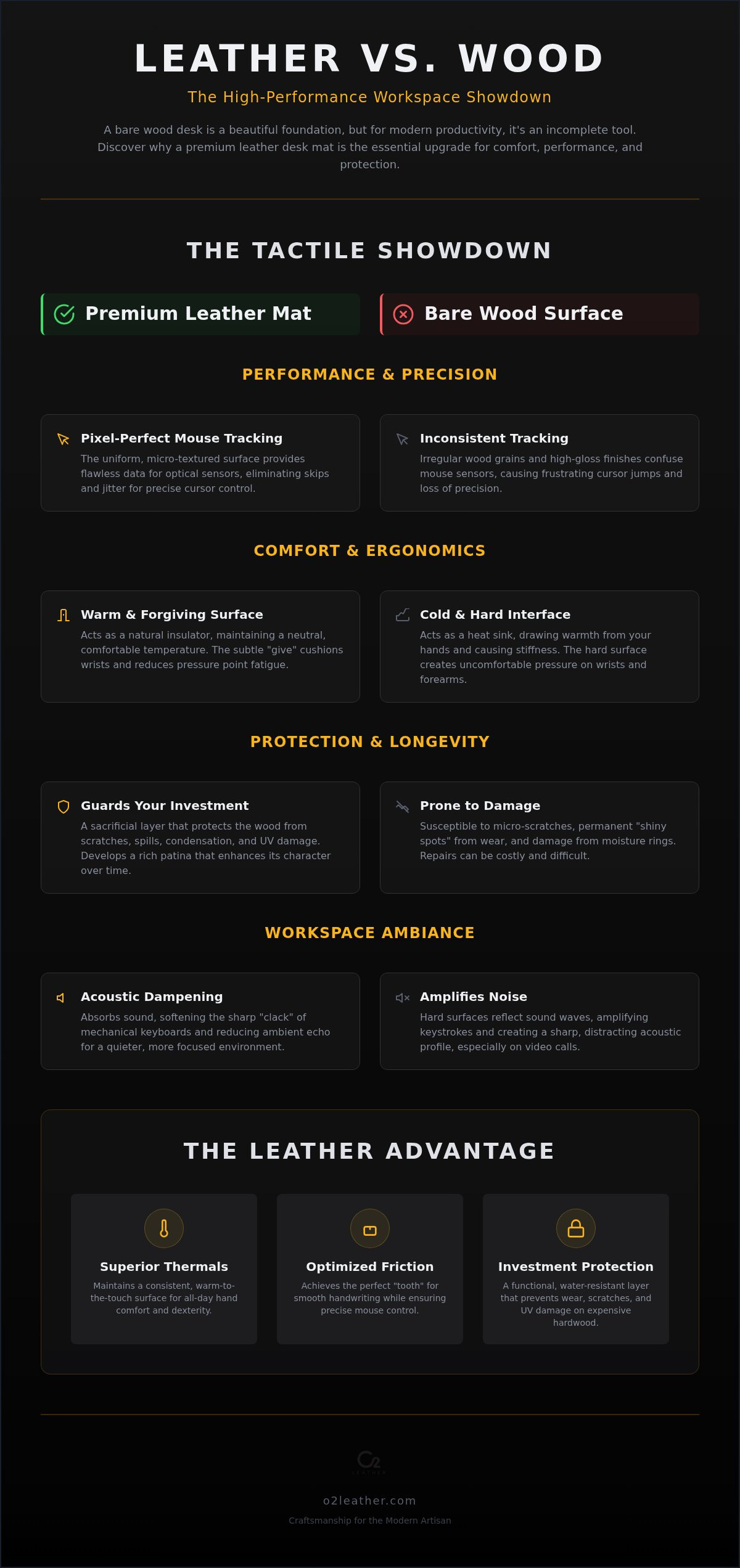
Wood is a heat sink. It draws warmth from your skin, leading to joint stiffness during long sessions. In 2026, the high-performance workspace requires better thermoregulation. Leather acts as a natural insulator. It maintains a neutral temperature that feels immediate and inviting. This isn't just about comfort; it's about maintaining dexterity. When your hands stay warm, your typing speed and accuracy remain consistent. You avoid the "cold shock" of resting your forearms on a bare oak or walnut slab in the morning.
The "tooth" of the material is equally vital for those who still value analog input. Polished wood is often too slick for handwriting. Pens skip. Paper slides. High-quality leather provides a specific resistance that guides the nib of a pen. It creates a tactile feedback loop that makes note-taking feel deliberate. This surface also serves a protective role. Wood finishes are notoriously susceptible to moisture and heat. As detailed in the Wood Handbook, moisture content significantly affects wood's stability and finish longevity. A water-resistant leather mat acts as a sacrificial layer. It protects the grain from condensation and spills without compromising the desk’s aesthetic.
The Writing and Tracking Interface
Wood is unforgiving. Every micro-vibration from your keyboard or mouse travels through the rigid surface. A leather desk mat offers a subtle "give." This slight compression reduces the impact on your hands and wrists. It also stabilizes your peripherals. Keyboards that "skate" on polished timber stay firmly anchored on leather. For your mouse, the uniform texture ensures the sensor reads movement with surgical precision. You eliminate the jitter often caused by irregular wood grains. It's the most effective way to settle the leather desk mat vs wood debate for power users.
Acoustic Dampening and Focus
Minimalist offices often suffer from acoustic echo. Hard wood surfaces bounce sound waves, creating a sharp, metallic "clack" with every keystroke. This is particularly distracting during video calls where every tap is amplified. Leather is a natural sound absorber. It dampens the high-frequency noise of mechanical switches. It softens the "thud" of a phone being set down. By reducing this ambient noise, you lower your cognitive load. You stay in the flow state longer. It’s a quiet upgrade for a loud world. If you value a unified sensory experience, consider pairing your mat with a matching iPhone 17 Pro Max leather case to ground your tech in artisanal quality.
Tactile Showdown: Leather Desk Mat vs Wood
The physical sensation of your workspace defines your daily mood. Polished wood surfaces often possess a low friction coefficient. They are slick. Peripherals slide with the slightest nudge. In contrast, textured leather introduces a controlled resistance. It feels intentional. This material grips the base of your devices while allowing your hands to glide across the surface without the jarring "stutter" of skin against a lacquered finish. When evaluating a leather desk mat vs wood, you must consider the visual depth of your setup. A mat creates a frame. It adds a sophisticated layer that breaks the monotony of a single timber grain, making your tech feel integrated rather than merely placed.
There is a common misconception that leather becomes sticky during warmer months. This is a symptom of synthetic PU materials, not high-tier hides. Premium leather is breathable. It possesses a natural porosity that allows for air exchange. It remains supple and dry to the touch even during intense focus sessions. This organic quality ensures that your workspace remains an inviting environment rather than a sterile one. You aren't just adding a cover; you are adding a living texture that complements the rigid strength of your desk.
The Patina vs. Wear Debate
Materials tell a story over time. Wood is prone to degradation. A deep scratch in a walnut top is permanent damage that often requires professional sanding and refinishing to correct. Leather operates on a different timeline. Much like leather watch bands, a desk mat absorbs the history of its use. A scuff or a mark isn't damage; it’s the beginning of a patina. These marks blend into the grain, adding character and a unique luster that wood cannot replicate. Maintaining this beauty is simple. While wood requires complex oils or waxes to prevent cracking, leather thrives with an occasional artisanal conditioner. It’s a self-healing aesthetic that rewards the long-term user.
Thermal Comfort and Skin Contact
Resting your forearms on a bare wood desk in a climate-controlled room can be a jarring experience. Dense timber is slow to adapt to your body heat. It remains a cold, hard block that can lead to discomfort in your elbows and wrists. Leather responds differently. It adapts to ambient room temperature with remarkable speed. While wood remains a static foundation, leather is a living material that responds to the warmth of the user. This creates a soft, inviting contact point that makes eight hours of production feel significantly less taxing. It provides a cushioned transition between the digital world and your physical body, ensuring that your focus remains on the task rather than the hardness of your furniture.
Protecting the Investment: Longevity and Maintenance
A high-end wood desk is a legacy piece. Over years of use, specific areas suffer more than others. In 2026, the "shiny spot" remains a common frustration for timber enthusiasts. This occurs where your palms and mouse constantly rub against the grain, polishing the finish unevenly. When evaluating a leather desk mat vs wood for long-term care, the mat serves as a sacrificial layer. It absorbs this friction. It also provides a critical shield against UV radiation. If your workspace sits near a window, the portion of wood covered by leather remains rich and saturated. The exposed grain, however, can bleach and lose its depth over time.
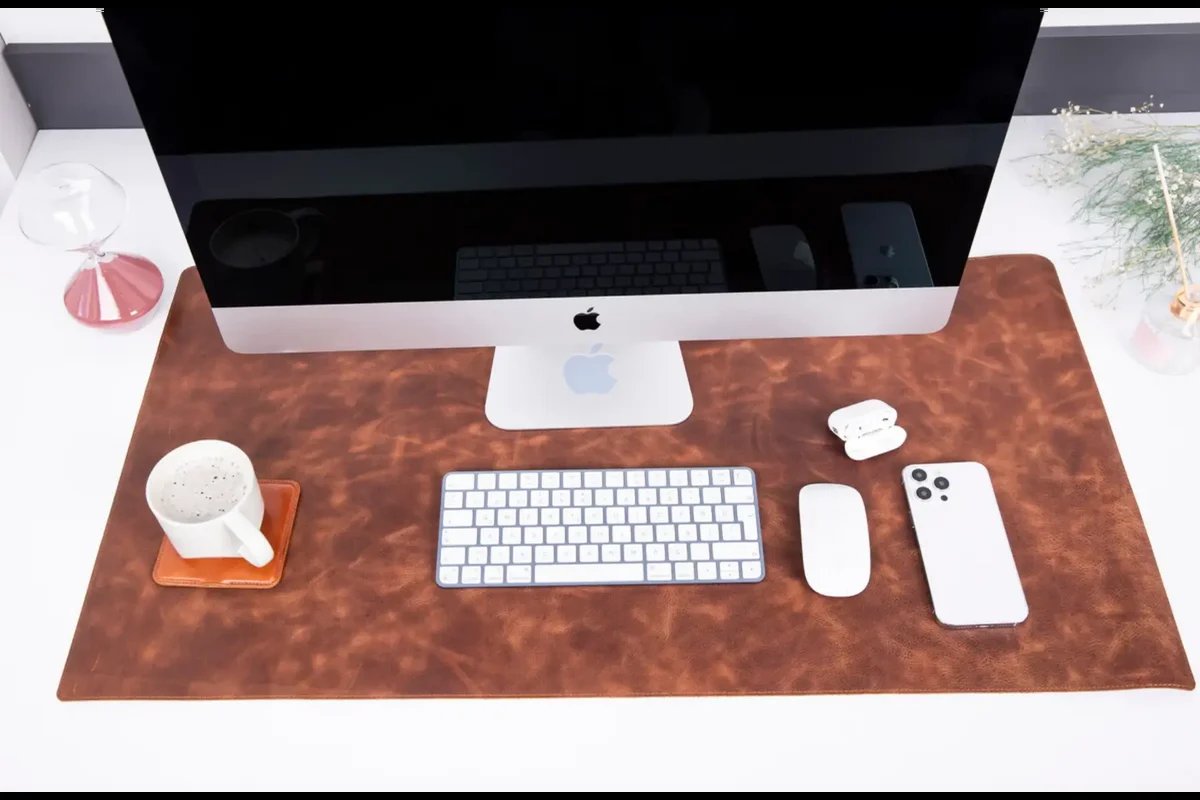
Spills are the ultimate threat to porous timber. Even the best sealants can fail under the standing water of a coffee ring. O2's artisanal hides feature water-resistant treatments that create a reliable liquid barrier. This buys you time to wipe away accidents before they reach the wood fibers. Choosing the right size is a balance of aesthetics and utility. A large mat covers the primary work zone while leaving the perimeter of your desk visible. This preserves the visual impact of your furniture while securing the area most prone to daily damage.
Visual Harmony: Matching Leather to Wood Grains
Coordination is the hallmark of a curated space. For a deep, authoritative "Executive" look, pair Dark Walnut or Mahogany with Black or Deep Brown leather. It creates a seamless, moody transition. If you prefer a "Scandi-Modern" feel, Light Oak or Ash pairs beautifully with Tan or Cognac. These warmer tones highlight the natural honey hues of the wood. You can extend this design language to your mobile tech. Matching your desk surface with iPhone 17 Pro Max leather cases creates a unified sensory experience across your entire digital interface.
The Maintenance Ritual
Artisanal leather doesn't require a complex schedule. It demands a ritual. Start with simple dusting. For deeper cleaning, a slightly damp cloth is sufficient. Avoid harsh chemicals that strip natural oils. Every few months, apply a high-quality leather conditioner. This maintains the suppleness and prevents the hide from drying out. This longevity is the primary differentiator between genuine hides and PU alternatives. Synthetic mats suffer from edge-peeling and delamination within a year of heavy use. Genuine leather remains structurally sound. It ages with grace. It becomes a permanent part of your collection.
Secure your workspace and preserve your desk’s character with our premium water-resistant leather deskmats.
The O2 Leather Desk Mat: Craftsmanship for the Modern Artisan
O2 Leather doesn't just sell covers. We provide the functional interface for your digital life. Our commitment to water-resistant, premium hides ensures that your workspace remains resilient without losing its soul. We embrace the "Modern Artisan" philosophy. It’s the marriage of traditional tanning techniques with the demands of 2026 technology. When evaluating a leather desk mat vs wood, the decision comes down to the quality of your daily interaction. The choice isn't binary. The mat is the completion of the desk. It is the sensory layer that makes hours of deep work feel like a curated experience rather than a chore. We believe in objects that carry weight, both physically and metaphorically.
Our hides are selected for their depth and durability. They are treated to withstand the realities of a high-performance lifestyle. Coffee spills and heavy equipment are no longer threats to your heirloom furniture. Instead, they are part of the landscape. This is leather designed for real-world use. It’s for the professional who values the grain of the wood but demands the performance of a high-end material. You are not just organizing a desk. You are sculpting a sanctuary for focus.
Designed for the Tech-Forward Professional
Modern work requires agility. Our mats feature a slim, low-profile design. They don't add unnecessary bulk. They add precision. This sleekness ensures your desk remains a focused environment, free from the visual clutter of thicker, synthetic alternatives. The texture is optimized for high-end tech. Whether you are charging your latest iPhone or resting your wrist while checking an Apple Watch, the surface feels intentional. It mirrors the layered luxury of our Double Wrap Leather Watch Band. It’s about a consistent aesthetic across your entire collection of tools. Your desk becomes a reflection of your standards. It is a unified ecosystem where every object serves a purpose.
Your Workspace, Refined
Stop buying temporary solutions. Most workspace accessories are designed for obsolescence. They fray. They peel. They lose their shape within months. O2 Leather is different. We focus on lifetime materials. These are objects that grow with you. They absorb your history and develop a character that is uniquely yours. Investing in quality is a quiet act of pride. It tells the world-and yourself-that your work matters. It’s time to move beyond the friction of bare timber and the coldness of raw surfaces. Elevate the daily grind through tactile excellence. It is the difference between a place where you work and a place where you thrive. Curate your workspace with O2 Leather Deskmats.
Redefining the Interface of Your Workspace
Your desk is more than furniture; it's where your legacy is built. Choosing between a leather desk mat vs wood isn't a matter of aesthetics alone. It’s about creating a functional layer that responds to your touch. We’ve explored how premium leather provides the thermal warmth, acoustic dampening, and mouse precision that raw timber lacks. It acts as a guardian for your investment, preventing the wear and UV damage that inevitably affects heirloom wood surfaces. This is the final step in sculpting a workspace that works as hard as you do.
O2 Leather brings you water-resistant premium materials and artisanal heritage craftsmanship without the traditional markup. By focusing on direct-to-consumer luxury pricing, we ensure every Modern Artisan has access to tools that last a lifetime. You don't have to choose between the beauty of wood and the performance of leather. You can have both. It’s time to move beyond the cold, hard surface of the past and embrace a more refined, comfortable workstation. Your best work is waiting for a surface that supports it. Start building your collection today.
Elevate your workspace with the O2 Leather Desk Mat Collection
Frequently Asked Questions
Is a leather desk mat better than wood for gaming?
Leather provides a more consistent tracking surface than bare wood. Optical sensors often struggle with the reflective finishes or deep grains of raw timber. A premium leather mat offers a uniform texture that ensures surgical precision during fast movements. It also dampens the vibration of aggressive mouse clicks. It settles the leather desk mat vs wood debate for gamers by prioritizing performance and stability.
Will a leather desk mat damage the finish of my wood desk?
No, a premium leather mat will not damage your wood desk; it actually protects it. It prevents the localized "shiny spot" wear patterns and micro-scratches caused by daily peripheral movement. Genuine leather with a natural, untreated backing won't react with modern lacquers or oils. It preserves the structural integrity of your hardwood while adding a sophisticated functional layer to your workspace interface.
Does leather feel sticky during the summer months?
Genuine leather does not feel sticky because it is a naturally breathable material. Unlike synthetic PU alternatives that trap heat and moisture, premium hides possess a natural porosity. It remains cool and dry to the touch even during the height of summer. This ensures a comfortable, non-stick experience for your forearms. You get the tactile luxury of an organic material without the discomfort of lower-grade plastics.
Can I use an optical mouse directly on a leather desk mat?
Modern optical sensors perform exceptionally well on textured leather. The matte finish eliminates the light scattering often found on polished or glossy wood surfaces. This results in smoother cursor movement and fewer tracking skips. It transforms your desk into a professional-grade tracking zone. It is the ideal solution for designers and power users who require absolute accuracy during long working hours.
How do I clean coffee spills off a premium leather mat?
You can clean coffee spills by blotting the area immediately with a clean, damp cloth. O2 Leather mats feature water-resistant treatments designed for real-world use. Avoid scrubbing the surface or using harsh chemical cleaners that strip natural oils. For long-term maintenance, a specialized leather conditioner applied every few months keeps the hide supple. It ensures your mat continues to age with grace and character.
What size leather desk mat should I choose for a standard 60-inch desk?
For a standard 60-inch desk, a mat between 31 and 36 inches is the ideal choice. This "Medium-Large" footprint covers your primary work zone including your keyboard and mouse. It leaves roughly 12 to 15 inches of visible wood on either side. This creates a balanced, "anchored" aesthetic. You protect the most high-traffic area while still showcasing the natural beauty of your desk's grain.
Does genuine leather smell strong in a small office?
Genuine leather has a subtle, pleasant scent that is not overpowering in small spaces. It is a faint, earthy aroma that signals artisanal quality rather than a sharp chemical odor. In a small office, this scent is unobtrusive and often dissipates into a neutral profile within days. It adds to the sensory experience of a curated workspace. It feels like a meaningful addition to your collection.
Is leather more durable than felt for a desk pad?
Leather is significantly more durable than felt for a high-end desk pad. Felt pads are prone to pilling, fraying at the edges, and absorbing deep stains that are impossible to remove. In the leather desk mat vs wood comparison, leather is the only material that improves with age. It develops a unique patina and remains structurally sound for years. It is a lifetime investment in quality.