

Leather vs Silicone Apple Watch Band: Busting the Durability and Style Myths
Why settle for a material designed for a gym locker when your day is spent in the boardroom? Most users default to the silicone strap that came in the box because it feels like the safe choice. But by midday, that non-breathable synthetic often feels tacky against the skin. Its flat, matte finish can't help but look out of place in a professional setting. When you compare a leather vs silicone apple watch band, you aren't just choosing a look. You're choosing how you interface with your technology for twelve hours a day.
It's true that silicone is waterproof. However, it's also static. It never changes and eventually tears. We understand the fear that leather might be too delicate for daily life, but the reality is quite the opposite. A premium leather apple watch band apple enthusiasts prefer doesn't just survive the workday. It evolves. It develops a rich patina that tells a story, offering a tactile comfort that synthetic polymers cannot replicate.
This guide will dismantle the myths about leather's fragility. You'll learn why artisanal craftsmanship creates a band that outclasses silicone in every professional setting. We'll explore how our Rally, Cuff, and Water Resistant styles provide the sophisticated authority your wrist deserves.
Key Takeaways
- Move beyond the default silicone utility to embrace a material that develops character and reflects a modern artisan lifestyle.
- Bust the durability myth by seeing how full-grain leather fibers thrive under movement, outlasting synthetic alternatives in the leather vs silicone apple watch band comparison.
- Elevate your daily comfort with breathable, organic hides that eliminate the skin irritation often caused by non-porous polymers.
- Master the art of selection by matching artisanal Rally or Slim bands to your professional mission for a seamless transition from work to evening.
- Pair high-performance tech like the Apple Watch Ultra with premium straps that mirror its rugged, high-end construction.
The Great Material Debate: Silicone Convenience vs. Leather Character
Most Apple Watch owners start with the standard fluoroelastomer band. It's functional. It's expected. It serves a purpose for the first few weeks of ownership. But as the initial novelty of the hardware fades, the limitations of the "sport" aesthetic become clear. Choosing between a leather vs silicone apple watch band is the first step in moving from simply owning a gadget to curating a personal style that reflects your professional standards.
The Silicone Trap: Why Mass-Produced Isn’t Always Better
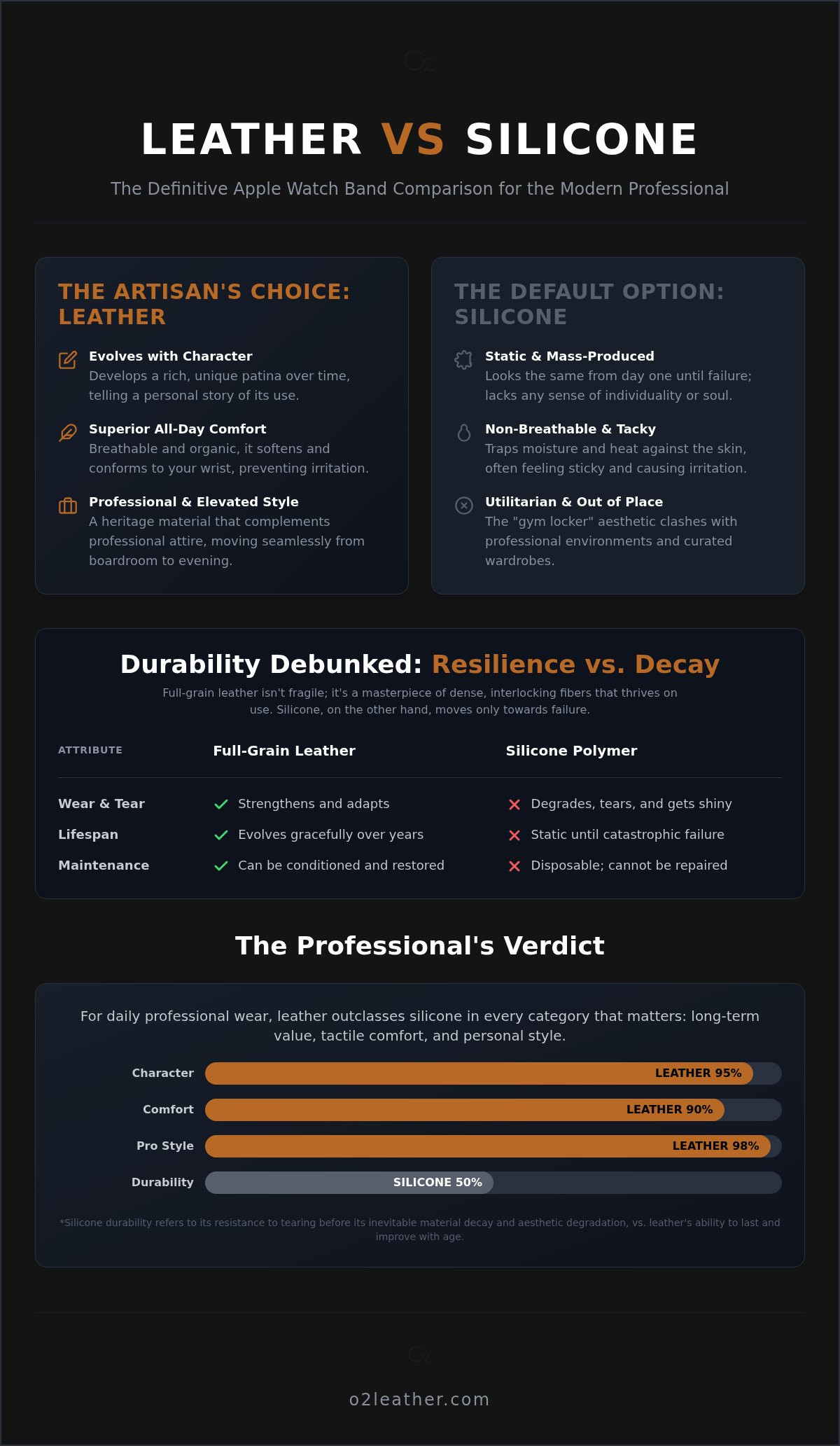
Silicone is everywhere in the tech world. It's the default material for the masses because it's cheap to produce and easy to mold in high volumes. While it's waterproof, it's also entirely static. A silicone band will look exactly the same on day one as it does on day five hundred, right until the moment the synthetic material finally fatigues and snaps. It doesn't breathe. It doesn't adapt. It simply sits on the skin, often trapping moisture and causing irritation during long days at the office.
There is a distinct lack of soul in a molded polymer. It feels like a disposable accessory rather than a meaningful part of your wardrobe. For the professional who values intentionality, wearing a mass-produced plastic strap can feel like a compromise. It signals utility over taste. It suggests that your watch is merely a tool, rather than an extension of your persona.
The Leather Legacy: Beyond the Aesthetic
Leather represents a different philosophy. It's a heritage material that respects the wearer. A leather apple watch band apple enthusiasts trust is an investment in character. Unlike silicone, full-grain leather is a living material. It responds to your environment. It absorbs the oils of your skin and the sunlight of your days, developing a unique patina that cannot be manufactured in a factory. This evolution makes the band uniquely yours.
At O2 Leather, we embrace the Modern Artisan persona. We believe technology should be paired with materials that have history and depth. Our leather straps are crafted to ensure they feel premium from the first wear. We don't just sell bands; we provide the bridge between cutting-edge tech and timeless craftsmanship.
This choice isn't just about looking better in a suit. It's about how the material feels after twelve hours of wear. It's about the weight, the scent, and the way the leather softens to match the specific contours of your wrist. We're here to bust the myth that leather is a fragile luxury. It's a durable, breathable, and superior alternative to the silicone trap.
Myth #1: Silicone is Indestructible and Leather is Fragile
The common perception of a leather vs silicone apple watch band often favors the synthetic for sheer durability. It's a misconception born from experiences with cheap, low-grade leather. In reality, silicone is a material of diminishing returns. Full-grain leather, however, is a biological masterpiece that thrives on interaction and movement.
The Hidden Decay of Synthetic Polymers
Silicone is frequently marketed as an indestructible, "forever" material. It isn't. Over time, these synthetic bands act as magnets for lint, dust, and body oils. You've likely noticed "silicone shine" on older straps. This is the permanent polishing of the material's surface through friction against your sleeves. It isn't a patina; it's a breakdown of the polymer's texture that looks greasy and worn.
Unlike organic materials, silicone cannot be restored. Once a synthetic band is gouged, stained, or begins to tear, its journey ends. It lacks the self-healing properties found in a dense fiber matrix. It's a static utility that only moves toward failure from the moment it leaves the mold. It cannot be conditioned. It cannot be saved.
The Resilience of Full-Grain Fibers
Fragility is a hallmark of "genuine leather," which is often just a marketing term for the lowest tier of processed scraps. Full-grain leather is the complete hide. Its interlocking fibers are incredibly dense and naturally resilient. Proper movement actually keeps these fibers supple, preventing the brittleness seen in inferior goods. This material doesn't just endure; it strengthens through use, adapting to the stresses of your daily life.
Water-Resistant Leather: The Modern Hybrid Solution
The final argument for silicone is usually its relationship with water. This is where modern craftsmanship changes the narrative. Our water-resistant bands utilize a specialized tanning process that infuses the hide with hydrophobic properties at the molecular level. It doesn't just coat the surface. It transforms the material's nature to repel moisture while maintaining breathability.
These bands bridge the gap between the gym and the gala. You get the high-performance utility of a sport strap paired with the sophisticated authority of a premium accessory. If you're looking for a band that handles a morning workout and a high-stakes afternoon meeting, exploring our full-grain leather collection is the logical next step for your wrist.
Sensory Experience: Why Your Skin Prefers Tanned Hide
Wearable technology is the most intimate hardware we own. It sits against your pulse for sixteen hours a day. This proximity demands a material that respects your physiology. When comparing a leather vs silicone apple watch band, the most profound difference isn't visual. It's tactile. It's the difference between an inorganic barrier and an organic companion. Your wrist knows the difference within the first hour of wear.
Silicone feels efficient in the box. On the wrist, however, it quickly becomes "sticky." As your body temperature fluctuates, the non-porous synthetic surface traps heat. It creates a vacuum-like seal that prevents the skin from performing its natural regulatory functions. Premium leather offers a supple alternative. It has a weight and a scent that signals artisanal quality. It feels warm in the winter and cool in the summer. It's a material that works with your body, not against it.
Breathability and Thermal Regulation
The primary failure of mass-produced polymers is their lack of pores. Silicone is an absolute barrier. Moisture from sweat has nowhere to go. This "sweat trap" is the leading cause of "watch rash." That red, itchy irritation is something many users accept as a side effect of smartwatches. It isn't the watch causing the problem. It's the strap. Non-breathable synthetics force your skin to sit in its own moisture for hours on end.
Natural hide is inherently breathable. The microscopic pores in the leather allow for consistent airflow. This thermal regulation ensures that even after a twelve-hour workday, your wrist remains dry and comfortable. You don't need to take the watch off to let your skin breathe. The material performs that task for you. It's a level of comfort that silicone simply cannot replicate, regardless of how many "ventilation holes" are punched into the mold.
The Patina Factor: Growing With You, Not Wearing Out
There is a common myth that leather is failing when its color shifts. This is incorrect. Our classic leather bands are designed to evolve. This process, known as patination, is the ultimate expression of material intimacy. It's why the leather vs silicone apple watch band debate usually ends once a user experiences a high-quality hide.
Your skin oils and the environment interact with the tanned surface. The leather darkens. It develops highlights and shadows unique to your specific lifestyle. While a silicone band slowly degrades into a shiny, greasy-looking strip, leather gains depth. It becomes a personalized record of your experiences. A changing appearance isn't a sign of wear. It's a sign of life. It's a sensory investment that grows more valuable every day you wear it.
Matching Band to Mission: When to Swap or Commit
A watch is a tool. A band is a mission statement. Many users treat their wrist as an afterthought, defaulting to whatever came in the box. But your schedule isn't static. Your choice in the leather vs silicone apple watch band debate should reflect your specific objectives for the day. While silicone is a utility player, leather is a specialist. It offers a range of silhouettes that adapt to your environment rather than just surviving it.
For those who prefer a minimalist profile, our Ultra-Slim Bands provide a refined aesthetic that avoids the bulk of standard sport straps. If your style leans toward heritage and speed, the Rally Bands evoke the automotive soul of classic racing gloves. For a bolder, more structural presence, the Cuff Bands offer a commanding look that transforms the watch from a piece of tech into a piece of architecture. Each style serves a different facet of the Modern Artisan life.
The Professional Wardrobe: Leather’s Unrivaled Versatility
In a digital office, leather provides a necessary tactile anchor. It elevates a suit or business casual attire in a way that a molded polymer never can. There is a psychological weight to heritage materials. Wearing leather suggests a respect for craftsmanship and an eye for detail. It signals that you value quality over convenience. To complete the aesthetic, many professionals pair their straps with iPhone 17 Pro Max leather cases. This creates a cohesive, curated look that projects sophisticated authority from the boardroom to the evening social.
Active Lifestyles: Navigating the Sweat Challenge
We believe in honesty. Silicone has its place. If your mission involves extreme mud, heavy salt water, or high-intensity gym sessions, the synthetic strap is the logical choice. It's a sacrificial layer. However, the idea that leather cannot handle a brisk walk or a light commute is a myth. High-quality hides are resilient. If you encounter a light workout, simply wipe the inner lining with a damp cloth and allow it to air dry. This simple maintenance preserves the suppleness of the fibers. You don't need to swap to plastic for every increase in heart rate. Most daily "missions" are handled better by a material that breathes and moves with you.
Ready to upgrade your daily carry? Explore our full collection of artisanal leather straps and find the perfect match for your next mission.
The O2 Leather Standard: Elevating the Apple Watch Ultra
The Apple Watch Ultra is a feat of engineering. It is a tool of titanium and sapphire, built for the extremes of human ambition. Yet, many users tether this high-performance machine to a mass-produced polymer. When evaluating a leather vs silicone apple watch band for the Ultra, the choice isn't just about style. It is about hardware parity. A watch of this scale requires a strap that matches its structural ambition and its premium materials.
Silicone serves a purpose in the water. But on land, it lacks the gravity that a titanium chassis deserves. Our O2 Leather straps are designed to bridge this gap. We provide the sophisticated authority that the Ultra’s default straps often miss. It is about moving beyond the "sport" label and into the realm of the modern adventurer. Leather isn't just an accessory for the Ultra; it is the watch's final, most refined form.
Craftsmanship That Complements Titanium
The 49mm face of the Ultra is substantial. It can easily overwhelm a thin, standard strap. We build our bands with the structural integrity needed to balance this larger footprint. We use high-grade hardware that mirrors the ruggedness of the watch itself. The fit is secure. The feel is solid. Every stitch is a testament to artisanal precision.
The Cuff band remains a bold choice for the Ultra user. It provides a wide, structural base that grounds the watch on the wrist. It creates a silhouette that is both commanding and sophisticated. This is not a band that fades into the background. It is a piece of architecture for your wrist, designed to withstand the rigors of a contemporary lifestyle while maintaining its poise.
Investing in Longevity: The Modern Artisan’s Choice
The leather vs silicone apple watch band debate ultimately comes down to your personal philosophy. Silicone is a choice of convenience. Leather is a choice of character. It is an investment in a material that has been respected for centuries. We invite you to choose the material that grows with you. Explore our full collection of artisanal straps and find the partner your technology deserves. Character is not manufactured; it is earned through wear. If you carry this philosophy into your everyday style, you can learn more about Memento Mori Clothing and their apparel inspired by the same principles.
Your Apple Watch is a masterpiece of modern engineering. It deserves a strap that matches its precision. The choice between a leather vs silicone apple watch band isn't just about aesthetics; it is about how you experience your technology every day. We've seen that while silicone offers a basic utility, it lacks the breathability and structural integrity of full-grain hide. Premium leather doesn't just survive your schedule. It evolves with you, developing a unique patina that synthetics cannot replicate.
From the rugged demands of the Apple Watch Ultra to the refined environment of the boardroom, heritage craftsmanship provides a level of sophisticated authority that mass-produced polymers never will. Our water-resistant options and artisanal designs ensure you never have to sacrifice performance for style. It's time to move beyond the disposable and invest in a piece that tells your story. Elevate your tech with O2 Leather’s artisanal bands and experience the difference of material intimacy. Your wrist will thank you for the upgrade.
Frequently Asked Questions
Can I wear my leather Apple Watch band while working out?
You can wear a leather band during moderate activity, though we recommend specialized water-resistant leather for high-intensity training. These bands are engineered to handle moisture without compromising their structural integrity. For heavy lifting or light cardio, the material remains supple and breathable. If you're engaging in extreme endurance sports or swimming, a secondary strap might be more practical to preserve your premium hide's longevity.
How do I clean a leather Apple Watch band after it gets sweaty?
Maintenance is straightforward and essential for preserving the material's health. Simply wipe the inner lining with a soft, damp cloth after a long day or a light workout to remove surface salts and oils. Avoid using harsh chemical cleaners or submerging the band in water. Allow the leather to air dry naturally at room temperature. Periodic conditioning with a high-quality leather balm will keep the fibers resilient.
Does silicone or leather last longer for daily Apple Watch wear?
In the battle of leather vs silicone apple watch band longevity, full-grain leather is the superior long-term partner. Silicone is a static utility that eventually fatigues, cracks, or develops a greasy shine that cannot be repaired. Leather is a living material. It gains strength through movement and can be conditioned to last for years. While a synthetic strap is a disposable accessory, a premium leather band is an investment.
Is leather more comfortable than silicone for people with sensitive skin?
Leather is significantly more comfortable for sensitive skin due to its organic, porous nature. Unlike non-breathable silicone, which traps heat and moisture against the wrist, leather allows for natural thermal regulation. This airflow prevents the friction and irritation often associated with synthetic polymers. The material softens as it adapts to your specific anatomy, providing a tailored fit that feels like a second skin rather than a plastic barrier.
Will a leather band make my Apple Watch look too formal for casual wear?
A leather band is remarkably versatile and does not relegate your watch to formal settings only. While a Classic Band pairs perfectly with a suit, styles like our Rally or Slim collections are designed for a contemporary, casual lifestyle. They offer a sophisticated authority that elevates a simple t-shirt and jeans—perhaps paired with premium urban apparel from DRIPrDRY—without feeling overdone. Leather adds a layer of intentionality to your look, suggesting a respect for quality craftsmanship.
The difference lies in the material's soul and construction. Silicone is a molded, non-porous polymer that repels water by default but lacks breathability. Water-resistant leather undergoes a specialized tanning process that infuses the hide with hydrophobic properties at the molecular level. This allows the band to repel moisture while retaining the organic texture of natural hide. In the leather vs silicone apple watch band comparison, leather provides superior thermal regulation.
How long does it take for a leather watch band to develop a patina?
The patination process is a unique journey that typically begins within the first few weeks of daily wear. You'll notice the leather starting to darken and develop highlights around the edges as it absorbs skin oils and interacts with sunlight. A deep, rich character usually establishes itself after three to six months of consistent use. This evolution is the hallmark of a premium leather band that tells your personal story.
Are leather bands compatible with the Apple Watch Ultra 2?
All our artisanal straps are fully compatible with the Apple Watch Ultra 2. The Ultra series utilizes the same lug architecture as the larger 44mm and 45mm models, ensuring a precise and secure fit. Our designs, particularly the bolder Cuff and Rally styles, provide the structural weight necessary to balance the Ultra's substantial titanium chassis. They transform the rugged tool into a curated piece of wearable architecture that feels balanced.