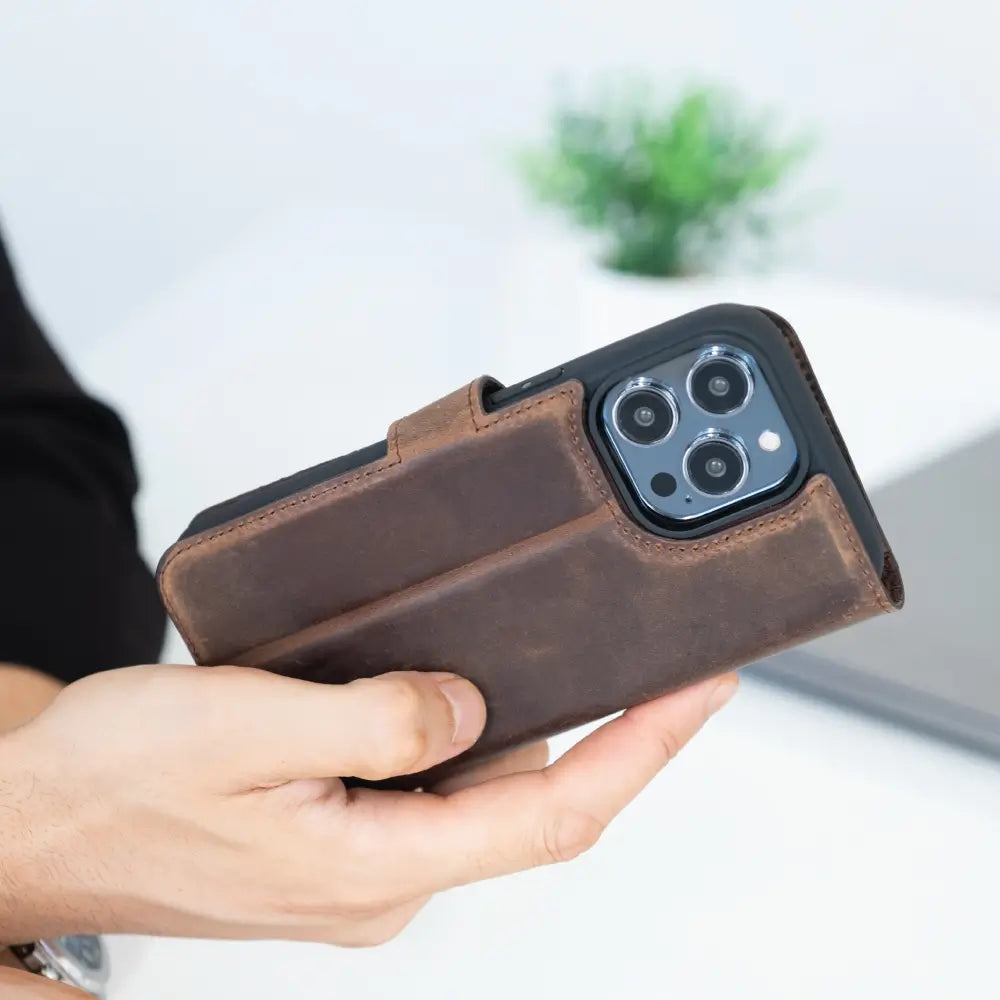

The Artisan's Lexicon: Understanding Leather Grades for the Modern Collector
That "Genuine Leather" stamp on your watch band is often a warning, not a badge of honor. It is the industry's most successful sleight of hand. Understanding leather grades is the only way to protect your collection from these hollow promises. You have likely felt the sting of a premium-priced case that cracks within months or a strap that peels at the edges. It is frustrating to invest in an object that loses its soul rather than gaining character.
We will show you how to master the nuances of material quality to ensure your next investment ages with strength. You will learn to distinguish premium full-grain from cheap corrected skins by sight and touch. This guide decodes the artisan's lexicon, exploring how high-quality hides develop a rich patina and deliver a superior long-term ROI for the modern collector.
Key Takeaways
- Identify the specific hide layers that define an accessory's lifespan and structural density.
- Understanding leather grades ensures you choose full-grain materials that develop a unique, storied patina over time.
- Verify quality through sensory markers, including natural pore patterns and the distinct, earthy aroma of traditional tanning.
- Avoid the pitfalls of corrected skins and "genuine" labels to secure accessories that age with strength and grace.
Decoding the Hide: Why Understanding Leather Grades Defines Your Gear's Future
Leather is a living history, a biological canvas that tells the story of the animal it once protected. Quality isn't a matter of chance. It is a direct result of which layer of the hide is selected. A leather grade is the classification of hide layers based on fiber density and surface treatment. During the leather manufacturing process, the hide is split into distinct strata. The "grain" refers to the outermost fibers. This is where the most density and structural durability reside. Mastering the art of understanding leather grades prevents the quiet frustration of buyer's remorse when your gear begins to age. High-quality materials don't just last; they evolve. They adapt to your movements and your lifestyle. Understanding leather grades is the first step toward building a collection that survives the test of time.
The 'Genuine Leather' Marketing Trap
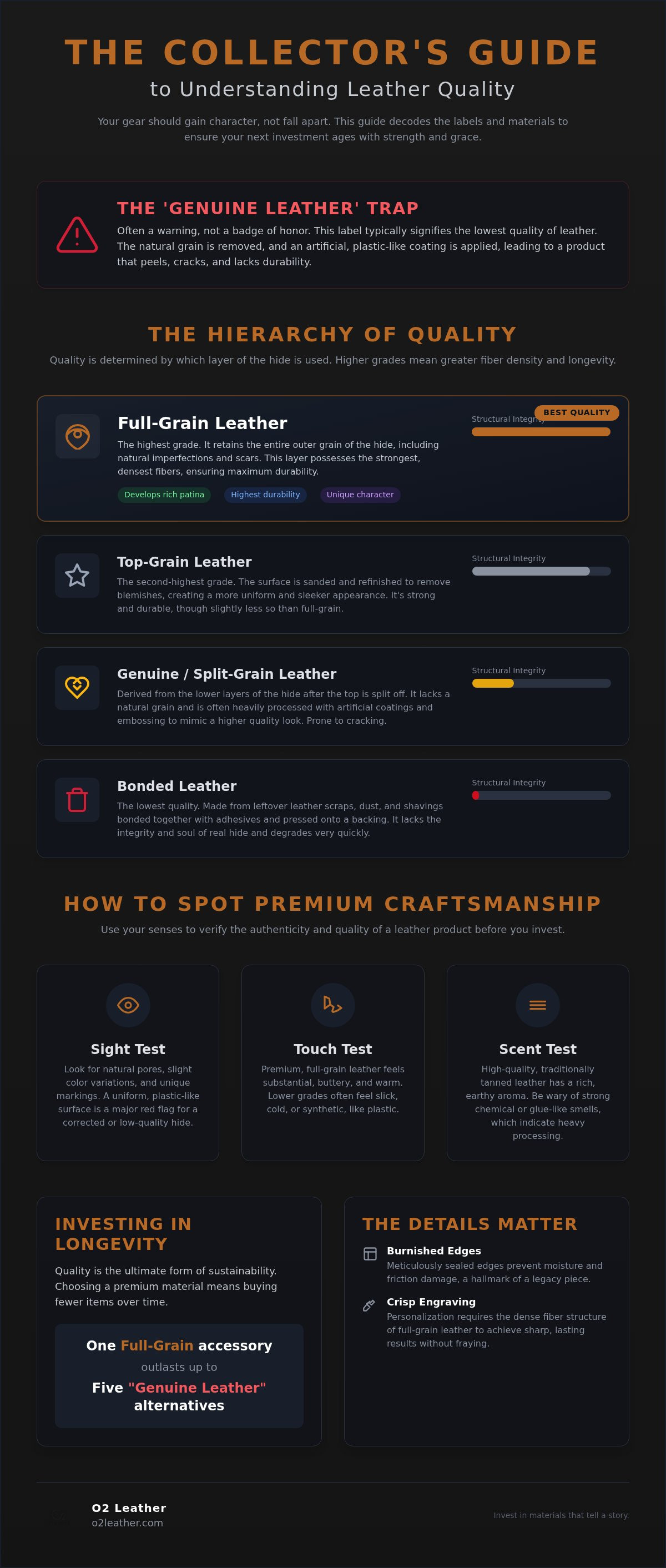
The term "Genuine Leather" is the industry's most deceptive catch-all. It represents the lowest quality remains of a hide once the premium layers are stripped away. This grade lacks a natural grain structure. To hide this, manufacturers apply thick, plastic-like coatings and artificial embossing to mimic a high-end appearance. The result is a fragile material that cannot breathe or flex. This is why mass-market watch bands peel and crack within months. They lack the inherent strength found in our Classic Apple Watch Bands. True luxury requires authenticity. Choosing a split hide over a full-grain layer is a compromise that eventually reveals itself through structural failure and a lack of character.
The Hierarchy of Quality: From Full-Grain to Bonded
The hierarchy of leather is a study in preservation. At the summit sits full-grain. It retains the entire natural grain, including the unique scars and imperfections that define a hide’s history. This layer is the gold standard for structural integrity. Below it, top-grain offers a refined, sanded alternative. Artisans polish the surface to remove blemishes, creating a more uniform, sophisticated look. Understanding leather grades requires looking deeper than the surface. You can learn more about how leather is graded to see how collagen density dictates long-term strength. In contrast, split-grain and bonded leather are reconstituted options. They trade longevity for a lower price point. Bonded leather is essentially leather scraps held together by adhesives. It lacks the soul and resilience of a natural hide.
Full-Grain vs. Top-Grain: Choosing Your Patina
The choice between these two premium grades depends on your aesthetic goal. Our Classic Apple Watch Bands utilize full-grain for maximum character. This material is alive. It absorbs environmental elements, darkening into a rich, sought-after patina that is unique to your journey. The tactile difference is immediate. Full-grain feels buttery and substantial. Corrected skins often feel slick, cold, or synthetic. If you prefer a sleeker, more consistent aesthetic, top-grain is the ideal choice. It provides the polished, modern finish found in our Ultra-Slim Apple Watch Bands. Only these upper tiers offer a true natural evolution. Lower grades don't age; they simply fail. Explore our leather cases to find a material that matches your personal style.
Investing in Longevity: How to Spot Premium Craftsmanship
Identifying high-end leather requires a sharp eye and a keen nose. Look for natural pores. Seek out slight color variations. These signal an unaltered grain. A uniform, plastic surface is a red flag. The "Scent Test" is equally vital. Premium leather smells earthy and rich. It should never remind you of industrial chemicals or glue. Understanding leather grades starts with these sensory markers. It is about recognizing the life within the material before you commit to the purchase.
Craftsmanship is visible at the edges. Burnished or painted edges on iPhone 17 Pro Max Leather Cases indicate a meticulous attention to detail. This process seals the fibers against moisture and friction. It is the hallmark of a legacy piece. Understanding leather grades allows you to invest with confidence. One full-grain band outlasts five "genuine" alternatives. Quality is the ultimate sustainability play. It is the only way to ensure your gear ages with character and enduring strength.
Material Integrity and Leather Engraving
Personalization demands a solid foundation. Leather engraving requires the dense fiber structure found in full-grain hides. The laser or tool needs resistance to create crisp, permanent results. Engraving on lower grades often leads to frayed edges. The tool can easily burn through the thin, corrected surface layer. We merge heritage techniques with modern personalization to create objects with meaning. This intersection is reserved for the discerning collector. Authenticity cannot be faked. It must be built into the grain from the very first cut. For those who wish to extend this philosophy of authentic quality to their home environment, they can visit Benjamin & Maxwell to discover premier home furnishings and luxury crystalware.
Your accessories shouldn't just exist; they should evolve. Mastering the art of understanding leather grades allows you to curate a collection that reflects your high standards. You now know that full-grain is the only layer capable of developing a rich, personal patina. You can distinguish between a cheap synthetic coating and a natural, breathable hide. Choosing premium materials is a deliberate commitment to both sustainability and style. It's about valuing the intrinsic worth of well-made goods.
Invest in gear that respects your time and your technology. Our accessories are crafted from premium full-grain hides and precision-engineered for the latest Apple and iPhone hardware. They're designed to gain character with every wear. Explore our collection of Full-Grain Apple Watch Bands to experience the sensory depth of true artisanal quality. Build a collection that stands as a lasting testament to your discerning taste.
Frequently Asked Questions
Is full-grain leather better than top-grain for a watch band?
Full-grain is superior for those who value character and longevity. It is the strongest layer of the hide. It retains the natural fibers and develops a unique, storied patina over time. Understanding leather grades is essential for choosing a Classic Apple Watch Band that offers enduring strength. Top-grain is a refined alternative with a more uniform, polished aesthetic.
What does 'patina' actually mean in terms of leather quality?
What does 'patina' actually mean in terms of leather quality?
Patina is the natural evolution of high-end leather. It occurs as the material absorbs oils from your skin and reacts to sunlight. This results in a darker, richer sheen and a softer feel. Only premium materials like full-grain can develop this sought-after finish. It serves as a visual badge of authenticity that lower-quality, plastic-coated skins cannot replicate. This same standard of material excellence is found in the sustainable fine jewelry and high-end home furnishings at JOSMIRLUXE.
A scent test is a powerful tool for the modern collector. Premium leather possesses a rich, earthy, and slightly sweet aroma. If an iPhone 17 Pro Max Leather Case smells like harsh chemicals, petroleum, or glue, it is likely a low-grade corrected skin. High-end tanning processes preserve the natural scent of the hide rather than masking it with industrial solvents.
Why is genuine leather considered the lowest grade if it says 'genuine'?
"Genuine" is a clever marketing term for the lowest quality remains of a hide. It technically contains leather fibers, but it lacks the structural integrity of the upper grain. Understanding leather grades helps you identify these deceptive labels. These products often use plastic-like coatings to mimic a premium look. They quickly crack and peel because they lack a natural, dense grain.